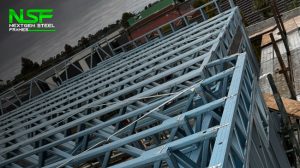
When planning a new home or undertaking a major renovation, the structure that supports everything else should never be an afterthought. Choosing the right framing system can influence durability, build time, and long-term maintenance. This article explains why steel roof trusses are increasingly seen as a smart choice for Australian conditions, and how they deliver strength, flexibility, and lasting value over the life of a home.
Steel roof trusses eliminate these structural headaches. Steel is an inert material; it does not warp, twist, shrink, or rot. This stability ensures that the roofline remains perfectly straight from the day it is installed until decades down the track.
Beyond structural stability, steel offers unmatched peace of mind regarding pests and fire safety. Termites cause millions of dollars in damage to Australian homes every year, often going undetected until it is too late. By choosing steel construction benefits like termite immunity, you completely remove the structural food source for these pests. Furthermore, steel is non-combustible. In a country prone to bushfires, having a roof structure that will not contribute to the spread of a fire is a critical safety feature for your family or business.
Top Benefits of Installing Steel Roof Trusses
While durability is a major factor, the practical advantages of steel on the construction site are just as compelling.
Superior Strength Without the Bulk
Steel trusses are incredibly strong for how light they are. You get serious load-bearing capability without the heavy, oversised beams that timber often requires. Because the weight is lower, there is less stress on the rest of the structure, which benefits the entire building. For installers, this also means the trusses are easier to lift, position, and secure, making the installation process safer and far more efficient on-site.
Built With Precision
Timber can be unpredictable. Knots, warping, and natural inconsistencies can create extra work once construction begins. Steel trusses, on the other hand, are made in a factory-controlled environment to exact measurements. When they arrive on site, everything lines up exactly as planned. Walls stay straight, ceilings are level, and plasterboard fits cleanly without time-consuming adjustments, saving builders hours during the finishing stage.
Smarter Overall Costs
Steel roofing is often assumed to be expensive, but the full picture tells a different story. While the material itself may cost slightly more upfront, steel trusses are prefabricated and quick to install. This significantly reduces labour time on site, which often leads to real savings by the end of the build. There is virtually no waste, and because steel doesn’t degrade, the ongoing maintenance costs are practically zero. When you look at the lifecycle of the building, steel often emerges as the more financially savvy choice.
Roof Truss Design: Precision and Engineering
The success of any roof starts long before the materials arrive at the site. It begins with intelligent roof truss design.
Modern steel fabrication relies on advanced software to create digital twins of the roof structure before a single piece of steel is cut. Nextgen Steel Frames utilises detailed 3D plans and layouts to visualise exactly how the roof will come together. This digital accuracy ensures that every truss is optimised for the specific loads it needs to carry, from heavy roofing materials to solar panel arrays.
This level of customisation allows architects and designers to push the boundaries. Roof truss design using steel facilitates complex architectural styles, such as large open spans and unique roof lines, which might be prohibitively expensive or structurally difficult to achieve with timber.
Crucially, this process is backed by rigorous compliance. Every frame supplied is engineer-certified to meet Australian Standards. This certification provides builders and homeowners with the assurance that their steel roof trusses are safe, compliant, and built to withstand local conditions.
Versatility in Residential and Commercial Roofing
One of the biggest strengths of steel is its adaptability across different sectors. Whether it is a cozy family home or a sprawling warehouse, roof structure solutions utilising steel deliver superior results.
Residential Applications
Modern Australian homes are moving away from small, compartmentalised rooms toward vast, open-plan living areas. Steel trusses for homes are the secret behind these airy designs. Because steel can span longer distances without needing internal support columns or load-bearing walls, it gives homeowners the freedom to create open kitchens, dining, and living spaces that flow seamlessly together.
Commercial Capabilities
In the commercial sector, time is money, and scale is everything. Steel roof trusses for commercial buildings are ideal for warehouses, retail spaces, and offices where large clear spans are a necessity. The speed of installation is a massive advantage here; prefabricated trusses can be lifted into place quickly, allowing the roof cover to go on sooner so that internal trades can get to work.
Durable Roof Trusses and Steel Roof Framing
The shift toward steel roof framing involves understanding the longevity of your investment. Durable roof trusses made from steel are typically coated (often with zinc/aluminium alloys) to prevent corrosion. This protection means that even in coastal areas or harsh environments, the structural integrity of the roof stays compromised.
When you choose residential and commercial roofing solutions based on steel, you are choosing a material that is 100% recyclable. Unlike treated timber which ends up in landfill, steel can be repurposed endlessly without losing its properties, making it an environmentally responsible choice for green builds.
Final Thoughts
The shift toward steel in the Australian construction industry is not just a trend; it is an evolution toward better quality buildings. With benefits ranging from fire and termite resistance to precision engineering and design flexibility, steel roof trusses are the clear winner for modern roofing.
Ready to secure your project with the best in the business? Contact Nextgen Steel Frames today for a quote on high-quality, engineer-certified steel roof trusses for your next build.
FAQs
Are steel roof trusses noisy when it rains?
This is a very common myth. The noise of rain is determined by your roof covering (like metal sheets or tiles) and, more importantly, your insulation. When steel roof framing is installed with proper thermal insulation and ceiling materials, a steel roof is no noisier than a timber one. The insulation absorbs the sound, keeping your home quiet and comfortable.
Can I install solar panels on a steel roof?
Absolutely. Steel trusses provide a stable, straight, and incredibly strong platform for solar installations. Because steel doesn’t bow or warp over time, it maintains the integrity of the solar array’s mounting system better than timber equivalents.
Do steel trusses rust over time?
Modern steel framing is technologically advanced. Products used in steel roof framing are treated with protective coatings (such as aluminum-zinc-magnesium alloys) that prevent corrosion. When installed correctly and kept dry within the roof cavity, these frames are designed to last for generations without rusting.